The Itch
Posted by

It’s not something you can just scratch and make it go away.  You can’t spray Bactine on it, or take some antihistamines to clear it up.  It’s worse than mosquito bites on top of poison oak, and it never goes away.

I’m sitting here this morning, eaten up with it.  I know I need to get to work, but all I can think of is hog hunting. 

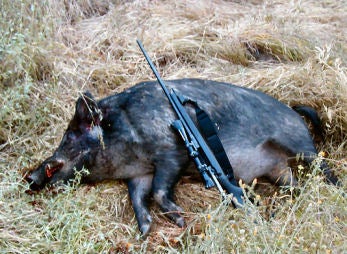
Big ol’ hog

My thoughts drift from actually chasing the hogs, to all the preparation I could be doing right now. 

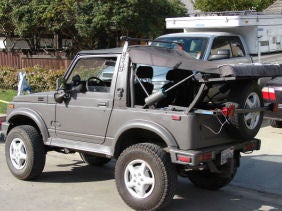
My “new” hunting vehicle needs some work, since the brake lights and turn signals appear to have come unwired.  I also want to look into replacing the springs on it, so it doesn’t rattle my teeth quite so bad on the slightest pothole.  And, as much as I’d like to delay it, I need to go see if it will pass the CA Smog test, so I can complete the registration process.  I also want to look into getting a vanity plate for her.  Her name is Petunia.

 Petunia

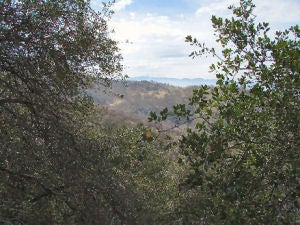
There’s a big part of me as well that just needs to get out of the bloody office and into the field.  I know that envy is one of those seven deadlies, but I can’t help being a little jealous of the folks who make their living in the outdoors.  Game wardens, biologists, full-time hunting guides and outdoors writers.  Here’s what I really wish my office looked like:

Tejon view

Anyway, I guess I’m not feeling too bad about it.  At my weekly chiropractor visit yesterday, I got to talking to the Doc.  I’ve convinced him to join me at Tejon over the Memorial Day weekend.  This’ll be his first hog hunt, and he’s gone all in about it.  Every time we get together now, a good part of the visit is spent discussing gear, hunting strategy, ammo, and anything else related to hunting. 

The itch is contagious, and now that I know I’ve passed it along, it makes my own case much more bearable. 

“Greenies with Guns” and Other Porcine Press Coverage
Posted by

As usual, I was browsing through my RSS feeds to see what’s happening in the world of the wild hog, and stumbled across this article in the Australian online version of the Courier Mail.  The article is a profile and interview with a couple of the helicopter-borne sharpshooters who are working to eradicate the wild and feral hogs from some of the most environmentally sensitive areas. 

An interesting sidenote to this article is this one, detailing the discovery of empty weapons crates that apparently once contained rocket-propelled grenades washed up on the beach near where they were working.  I don’t know about anyone else, but this kind of thing makes me a little nervous.  Hopefully it’s the product of some kind of legitimate military exercise… I’d hate to think these things are in the hands of the wrong folks.

Not a whole lot else of note taking place right now.  The discussion in Pennsylvania still centers around the likelihood that the release of feral pigs into the wild should be illegal, and in Kansas they’re still trying to figure out how best to eradicate the wily and resilient creatures.  Michigan will, once again, be promoting the harvest of feral hogs by all hunters in their “shoot on sight” program. 

Here in California, the lead ammo ban discussion is getting a little breather, as the Fish and Game Commission decided to postpone a vote on the subject.  Key questions right now seem to be how to enforce a ban, and the negative impact on hunters if non-lead alternatives aren’t readily available.  The next meeting of the Fish and Game Commission is scheduled for June 7, in Truckee, CA. 

The only other news of note about CA hog hunting is that I haven’t been out in a while and I’m getting the itch.  I hope to change that in the next week or so, and if all goes well, there’ll be fresh pork in my freezer before May! 

Going Unleaded
Posted by

It’s a trend that’s been going on, quietly it seems, for quite some time.  Lead ammunition is becoming an issue, and will likely be phased out on a very large scale.  

Waterfowlers were probably some of the first to see it, when lead shot for ducks and geese was banned over 20 years ago.  Despite the uproar caused by the proposal, and pessimistic predictions that waterfowling participation would dry up due to the excessive cost of non-lead ammo, the ban passed and duck hunters bucked up and kept on hunting. 

Shooting ranges have also been under the microscope, since lead ammo creates several toxicity risks…from the accumulation of lead in the ground downrange, to lead particulates and toxic gases released whenever a firearm is discharged.  Manufacturers have been racing to come up with acceptable replacements for lead.  The U.S. military and several law enforcement agencies have adopted “green” ammunition for range firing, and the trend is moving into the sport shooters.  Sweden is anticipated to have completely banned lead ammunition by 2008, and much of Europe is not far behind. 

The issue is coming to a head in California, as state lawmakers are poised to make a decision on the future of lead ammunition for the state’s big game hunters.  On the table are essentially four possibilities: ban lead ammunition statewide, ban lead ammo in the current condor range, ban lead in the historic condor range (much larger area), or not to ban lead at all.

While the majority of hunters would support that fourth option, many environmentalists, some biologists, and even some hunters are arguing for the total ban of lead.  From the way things are shaping up in the issue, it’s much more likely that we’ll see something in the middle. 

As I reported here earlier, Tejon Ranch announced earlier this year that hunters there would have to use completely lead-free ammunition beginning with the 2008 hunting season.  The restriction there goes beyond the CA Fish and Game Commission’s recommendations by also including all shotshells and rimfire ammunition. 

Deedy Bryson is a hunting guide and operator of the Bryson Hesperia Resort, and does a good bit of hunting in and around Fort Hunter Liggett (a military base that is often open to the public for hunting).  Deedy said her sources are indicating that Fort Hunter Ligget is also considering a ban on lead ammunition, at least for big game hunting. 

From where I’m sitting, it looks like the lead ban is coming, in one form or another.  Odds are that once it’s put into place, it’s not going away either.  In fact, there’s a strong likelihood that this is the beginning of a national trend.

What does it mean to hunters? 

Well, it means that we won’t be able to hunt with much of the ammunition we’ve become so familiar with.  The Core-Lokt, PowerPoint, and other basic stuff will become history, much as lead shotshells did for waterfowl hunters.  The big question mark for most hunters then, is what will replace lead ammo, and will we be able to afford it? 

Replacements are a little scarce right now.  Unlike shot manufacture, where tolerances are a little more flexible, rifle bullets require fairly precise balance and mass.  This is why lead was such a great material for making bullets.  Materials like Bismuth and “Hevi-shot” work fine for casting small pellets, but are much more difficult to work with in making bullets.  Tungsten has been used by the military, but they are now finding that tungsten bullets have their own pollution issues. 

Barnes, a bullet manufacturer out of Utah has been making all-copper bullets for several years now.  Despite some early issues with barrel fouling, they have created several new bullets that meet the lead-free designation and offer superior performance for big game hunting.  Unfortunately for many hunters who are on a budget, the Barnes bullets aren’t cheap.  For handloaders, a box of TSX bullets will run close to the cost of a box of factory loaded lead ammunition.  Factory ammunition with the Barnes bullets is as much as two to four times the cost of basic lead ammo ($19.99 for 30-06 Remington Core-lokt vs. $37.99 for Federal’s “Vital-Shok” loaded with Barnes TSX bullets on Cabelas website). 

Until recently, Barnes has been the only real player in the non-lead field.  However, based on a press release I got yesterday, Winchester ammunition has partnered with well known bullet manufacturer, Nosler, to release their new “ETipT”, non-lead bullet.  Currently only available in .30 caliber loadings (.308, 30-06, 300WinMag, and .300WSM), this entry should herald the offerings from other makers as the lead ammo ban goes from distant rumor to imminent fact. 

No word yet on the price range for the Winchester/Nosler ammo.

Personally, while I’m got a lot of issues with the argument that this is all about saving the condors, I do agree that getting rid of lead is probably a good idea.  It’s hard on the groundwater at shooting ranges and even in some major hunting areas.  It’s a threat to anyone who breathes the fumes along any shooting range, especially indoor ranges. 

It’s also tough on any animal that eats it, including us.  And anyone who eats any amount of game is ingesting a share of lead.  It’s been removed from almost every other aspect of our lives, at least in ingestible/inhalable forms.  Maybe it is about time that we remove it from our game and wild lands. 

Rainy day, dream away
Posted by

Sorry… just a quick snip from one of my favorite Jimi Hendrix tunes.  It’s perfect for today.

We’re having a little late season rain here in sunny California today, and it’s got me kinda daydreaming about hunts past and future.  I was supposed to be up in Sonoma County this morning, chasing hogs and turkeys with my bow, but a last minute change at work grounded those plans.  This little rainy stuff would’ve probably ruined the morning turkey hunt, but the hogs will be out rooting in force…and I’d much rather shoot 200 lbs of hog than 15 lbs of turkey (although those bird are pretty danged tasty).

But, I guess there’s nothing for it but to stare out the rain-spattered window at the grey morning and mentally meander about days afield.  Of course, my client would prefer that I stare at a computer screen and build a decent training program for their new product.  Alas… real life so often interferes!

Staring out the window

Latest edition of Hogs in the News
Posted by

Well, thought I’d take a jog through the RSS feeds to see what’s going on with hogs in the news lately.  Generally, this search leads to some blurbs and blips about wild pigs, and the occasional humorous story about wild hogs getting into some kind of trouble.

What I hadn’t hoped for was something like this bit, posted in the Tribune-Democrat of Johnstown, PA.  Here’s the critical kernel, if you will…

Although the study did not conclusively link the problem to hunting preserves, it found much that implies they are involved.

“We found it alarming, the amount of hunting preserves that are actually bringing these hogs into the state,” Glass said. “Some of them actually advertise that there is no fence. There are shooting preserves in 15 counties, some of them have multiple shooting preserves, and each of the five counties where we have confirmed feral hogs do have shooting preserves in them.”

This is becoming a more and more recurrent story, and it’s really concerning me.  First of all, it’s just wrong and irresponsible for anyone to import and establish breeding populations of invasive, non-native species in native habitats…especially knowing what we know now about ecology.  To think these folks are doing this solely in the name of the almighty buck really galls me.

Fortunately, at least for now, there’s no direct evidence that the hog hunting operations or “preserves” are intentionally spreading the population of wild hogs, but even the incidental escape of breeders is a big problem and, if it’s not curtailed, it’s something that is going to have a negative effect on hunters and hunt operations down the road.

I love hunting wild hogs.  I can’t say I’m not glad I have the opportunity to do so.  But the conservationist (and yes, the environmentalist) in me would not be sorry to see these animals gone from most parts of the country.  The long term effects of the spread of wild hogs is yet to be determined, of course, but most indicators are that it can’t be a good thing. 

I really hate the thought that it is hunters, and hunt operations, that are causing the continued spread of these animals when our very justification for liberal hunting seasons and limits is that we’re trying to eradicate them.  The anti-hunters won’t need a lot of this kind of ammunition to come after us hard and fast.  Don’t be surprised if more states take the direction of Kansas and ban sport hunting for wild hogs altogether.

At the very least, I’ve come to believe that one of the best strategies to control the spread is to stop allowing anyone to profit from hog hunting…whether it’s guides, tresspass fees, or maybe even preserves that can’t seem to keep their stock contained. 

Odds and ends again
Posted by

I think, because my ends are at odds with my beginnings or something to that effect, that this post is gonna be a little random.

First of all, I want to, belatedly, welcome Kristine Shreve of Gun Safety Innovations to the blogosphere.  I met Kristine, briefly, at the 2007 SHOT Show where she was demonstrating her new product, the GunSlinger.  As I surfed around some various blogs today, I found a link to hers. 

For those who haven’t seen it in Shooting Illustrated or elsewhere, the Gunslinger is a sling device for securing your weapon (rifle or bow) while you’re in a treestand. If you should drop your weapon, the Gunslinger will keep it from hitting the ground, avoiding damage to the weapon and the potential of an accidental discharge as well.

When Kristine described the device to me at SHOT, I told her it seemed like a great idea, and I wished I’d had something like this when I lived in NC where I almost always hunted from a tree.  Last year, my brother dropped his rifle, muzzle first, into the swampy mud 30 feet below his stand.  Fortunately, the mud was deep and the rifle simply stuck into the ground without damage.  But, just after it fell, he had a deer walk out in front of him.  The Gunslinger might have saved his hunt. 

It seems like a great idea, anyway, but since most of my hunting in CA is done from the ground, there’s not a lot of opportunity to put this great idea to the test.

Speaking of great ideas, here’s one that isn’t so great…whacking a katana (Japanese sword) on a hardwood countertop.  Make sure your audio is on…you’ll want to hear what this guy has to say.

Now for one more great idea… I need to clean up this office. 

Using all your senses for success
Posted by

I’ve always felt a little funny giving advice or trying to tell someone how to hunt.  I mean, I have a lot of years of experience, and I reckon I’ve learned a whole lot in those years.  I probably know a thing or two, and I do enjoy helping other folks learn some of the same lessons I’ve picked up.  But it still feels strange to think of myself as some kind of “expert”. 

With that in mind, and knowing that I still make more than my share of mistakes, here are a few tips that will probably up your odds of scoring your hog (most of this applies to any game).  It’s all about using ALL of your senses.

Use your vision. 

This one seems to be a no-brainer, but you’d be amazed at how many hunters aren’t really seeing everything that they should be.  When you’re in the woods, keep your eyes moving and don’t just look for a whole animal.  Most of the time, your first glimpse of an animal is a flash of movement from a foot, a flicking tail or ear, or the shadowy shape between the trees. 

Color is a giveaway too.  Wildlife generally blends well with the surroundings, but animals are seldom exactly the same color as a tree or bush (how many green hogs have you seen?).  Look for shades of color that don’t quite match everything else. 

Besides looking for animals, look for signs of animals.  Look for food sources, water, bedding cover, and signs of activity such as scat, rubs, and wallows (or scrapes if you’re hunting deer…scratching if you’re hunting turkey…etc.).  How many hunters have passed right through prime areas simply by failing to notice the critters’ little calling cards.

And keep looking.  Look at everything.  If it looks suspicious, hit it with the binoculars (NOT YOUR RIFLESCOPE!) a time or two to be sure what it is you’re seeing. 

I’ve taken a lot of flack over the years for my tendency to glass bushes, stumps, and rocks.  I’ll accept that flack, though, because the fact is…the one time you don’t take the time to look at something, then that rock or bush will stand up and run away.  If it looks like it could be an animal, take a moment to make sure it’s not before you move on.  Honestly, what do you have to lose?

See anything here? 
Looking carefully, what do you see here (hint, it’s NOT a bigfoot nest)?  When I found this bed, I could smell the scent of hogs thick in the air.  Soon afterward I found fresh tracks, and in less than 200 yards I located a herd of pigs moving toward a watering hole.

Use your ears. This is another obvious one.  If you’ve got your ears tuned in, you’d be amazed at what you’ll hear.  I’d say that about half the times I’ve spotted game, I heard it first.  This is particularly true with hogs, but deer, turkeys, and even bear have given themselves away with a broken twig, the crunch of leaves, or quiet grunting. Again, don’t just listen for specific animal sounds.  Anything out of place could indicate the stealthy passing of your quarry.  One thing that has always worked pretty well for me is to notice the birds, especially jay-birds.  If the birds go from a happy, busy chirruping to an annoyed or alarmed screeching, an alert hunter will move to find out the source of the alarm.  Jays are especially good watchdogs, and if you hear a bunch of jays screaming at something in the woods, you can bet there’s either game or another hunter (or they’re screaming at you).  Squirrels can serve the same purpose.  In some of the swampy places I’ve hunted back east, I always listen for the frogs to suddenly go silent.  Another indicator that something has disturbed their normal activity.Our sense of smell is not nearly as well developed as that of our quarry.  However, you should still put it to use when you’re afield.  Hogs can leave a definite scent in areas that they’ve recently vacated, particularly in bedding areas.  If you can smell them, they were either there very recently or they’re still nearby.  Elk is another animal that I’ve often been able to sniff out.

You might not think your sense of touch would do much good to you as a hunter, but you would be mistaken.

Tactile sensation can be very useful for determining the freshness of scat, rubs, or even tracks.  And no, you don’t have to pick up a hunk of pig crap and squeeze it between bare fingers.  Simply pressing at it with the toe of your boot will tell you if it’s soft and fresh, or if it’s had time to dry and harden.  You can feel a rub on a tree to see if the mud is still wet, or touch a track to see how easily the ground crumbles when determining how old the track is. 

The most important sense of all, though, is one that we all to often forget about… common sense.  Keep your wits about you and be safe! 

Another weekend in the field
Posted by

Well, sometimes it just goes like that.

Went down to Hollister, Ca to my friend, Chopper’s place, Chopper’s Wild Hog Adventures, this weekend for the turkey opener.  Hoped to double up with a longbeard and a big hog, but the fates conspired against me.  The full moon was the first big challenge, and the fact that I hunt with a recurve bow instead of one of those modern wheelie-bows is always a bit of a hurdle to success.  The pigs were out all night long, as evidenced by the ample amount of sign on the ground, but come daylight, they were all snug in their beds. 

I did manage to see a couple, including one really nice boar.  I even had one opportunity at about 25 yards, a little bit of a stretch for my traditional bow, but do-able… but the swirling breeze gave me away and the hog was off faster than my arrow could follow. 

There were plenty of turkeys too, like these guys.

 Gobbling toms

Unfortunately, as you’ll notice… this is a pair of toms hanging together, without a hen in sight.  So either the breeding season hasn’t fired up, or the birds in that neck of the woods have a different proclivity and the lineage is doomed to be short.  There are a bunch of them, though.  I could hear gobbling from every corner of that 4000 acre piece of heaven! 

There were six of us hunting, with five guys focused on toms and me focused on finally breaking my archery jinx on wild hogs.  Those guys tried calls, decoys, pop-up blinds and even spot and stalk, but came up short on taking a turkey.  The birds just weren’t responding, despite the resplendent chorus of gobbling they put up all weekend. 

By the end of the weekend, one hog was hanging in the cooler.  The stories flew thicker than arrows this weekend, though.  I sure am looking forward to getting back up there again.

Besides, some trophies don’t wear fur.  Spending a weekend in the splendor of the central CA hills and canyons is reward enough! 

Bloodless trophy!

Oh well… back to the grind! 

Next hunt?  Sometime this month…

Loose ends
Posted by

Before I take off for another long weekend of hunting (turkeys and hogs this weekend), I wanted to clean up a few loose ends.   

First of all as promised, here’s a link to the full write-up about my recent Texas hunt

Also, the unleaded ammo debate is still going, but it looks like the environmental groups and biologists are starting to rack up some serious evidence to support the lead ban.  Here’s a current article from the San Jose Mercury News. 

I’ve said before and will repeat it, this ban is coming and it’s not a really bad thing.  We know lead is toxic, and we have alternatives (albeit expensive ones).  It’s time for hunters to stop railing against this thing and start pushing the ammo companies to find better, more affordable, lead alternatives.  As more science comes to light on this issue, it’s becoming increasingly clear that if we (hunters) consider ourselves conservationists, then we need to not only accept, but embrace the removal of a deadly toxin from the environment. 

I’ll have more to come on the lead ban as it develops.  CA and VT are running neck and neck, it seems, to get rid of lead ammunition.  We’ll see who comes in first and who loses.

Hogs in the News – The Ongoing Saga
Posted by

Just saw where the April edition of Field and Stream is carrying an article about hunting hogs in the off-season.  According to the article, most hunters in the lower 48 now live within a day’s drive (often much less) of good, wild hog hunting.  As we’ve seen in some of the articles I’ve posted previously, hogs in the U.S. are showing up in places as diverse as Michigan, Oregon, and Colorado. 

Texas has probably got the largest population of wild/feral hogs in the country.  Depending on what source you refer to, the Lone Star State has between 1.5 million and 4 million (!) wild hogs running loose across the country-side.  Those hogs are starting to make their presence known in the bigger population centers now.  My friend Chris Fullilove, in Houston has seen them right up in his own neighborhood.  According to this article in the Jasper, TX news, Chris isn’t alone. 

Here in CA, wild hogs are making themselves a nuisance in San Jose neighborhoods as well.  Haven’t seen them in the news lately, but my friends who live in the area say they still come in nightly to root through the landscaping and flip over the trash bins.

In Kansas, professional hunters and sharpshooters from the USDA have killed over 25o hogs in a four week period, according to this article in the Witchita Eagle and posted on the Kansas.Com website .  At the same time, the sharpshooters haven’t fared as well in Missouri, where the eradication efforts have apparently focused on public land.  This short piece on the Brownfield Network tells us that the exterminators were unable to kill a single hog over the past week or so. 

There is trouble in paradise too, apparently, as Hawaiian officials are struggling to control the spread of these beasts in the islands.  This article from the Honolulu Advertister tells us that there is a call for more than ten times the current number of traps, and increased hunting to eradicate feral swine from the area.   If all goes well, I’ll be heading over there this fall or early winter to do my part to cut down the hog population on the island of Hawaii.  My friend,”Doc” Cherry has put a hurting on the population, but he can’t do it alone. 

The news keeps pouring in, and while it’s a mixed blessing, I’m doing my best to get out and help control at least a small part of the hog population.  I’ll be gone all this weekend to see if I can stick a few arrows in some of the local animals, and maybe trim the turkey population by one or two as well.